
Top image: Left to right: Ariane Hegewisch, Institute for Women’s Policy Research; Lark Jackson, Chicago Women in Trades; Iliana Flores, International Brotherhood of Teamsters; Dr. Lynn Shaw, WINTER; and Cindy Goff, ACLI
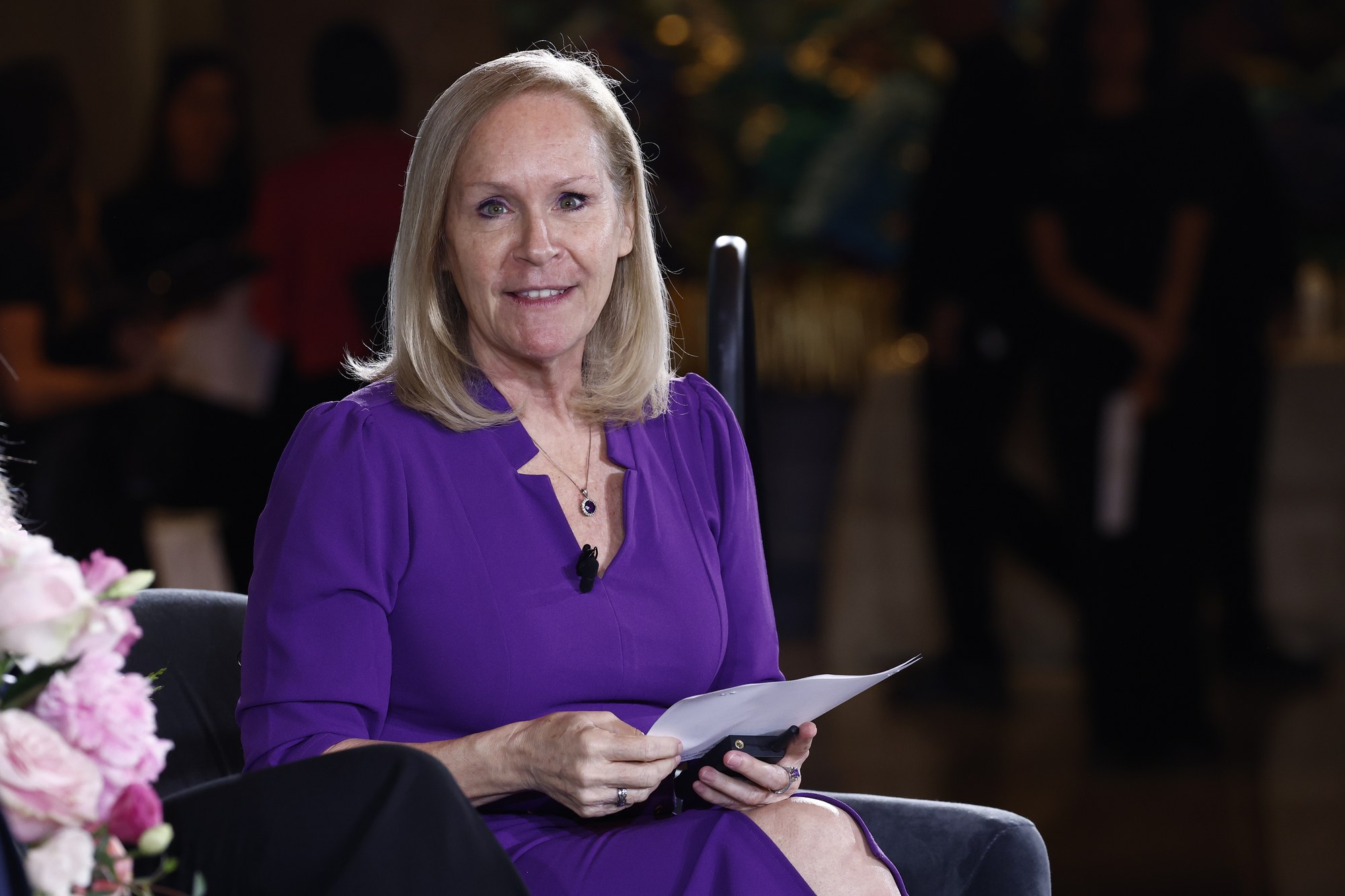
When Engage asked me to help build a panel on “Women in Skilled Trades,” I saw the discussion as an economic imperative that can solve two problems together. At a time when infrastructure, manufacturing, transportation, energy, and advanced technology all depend on a severely understaffed skilled workforce, women seek their rightful place as high-paying skilled tradespeople yet remain one of the most untapped sources of talent in the country.
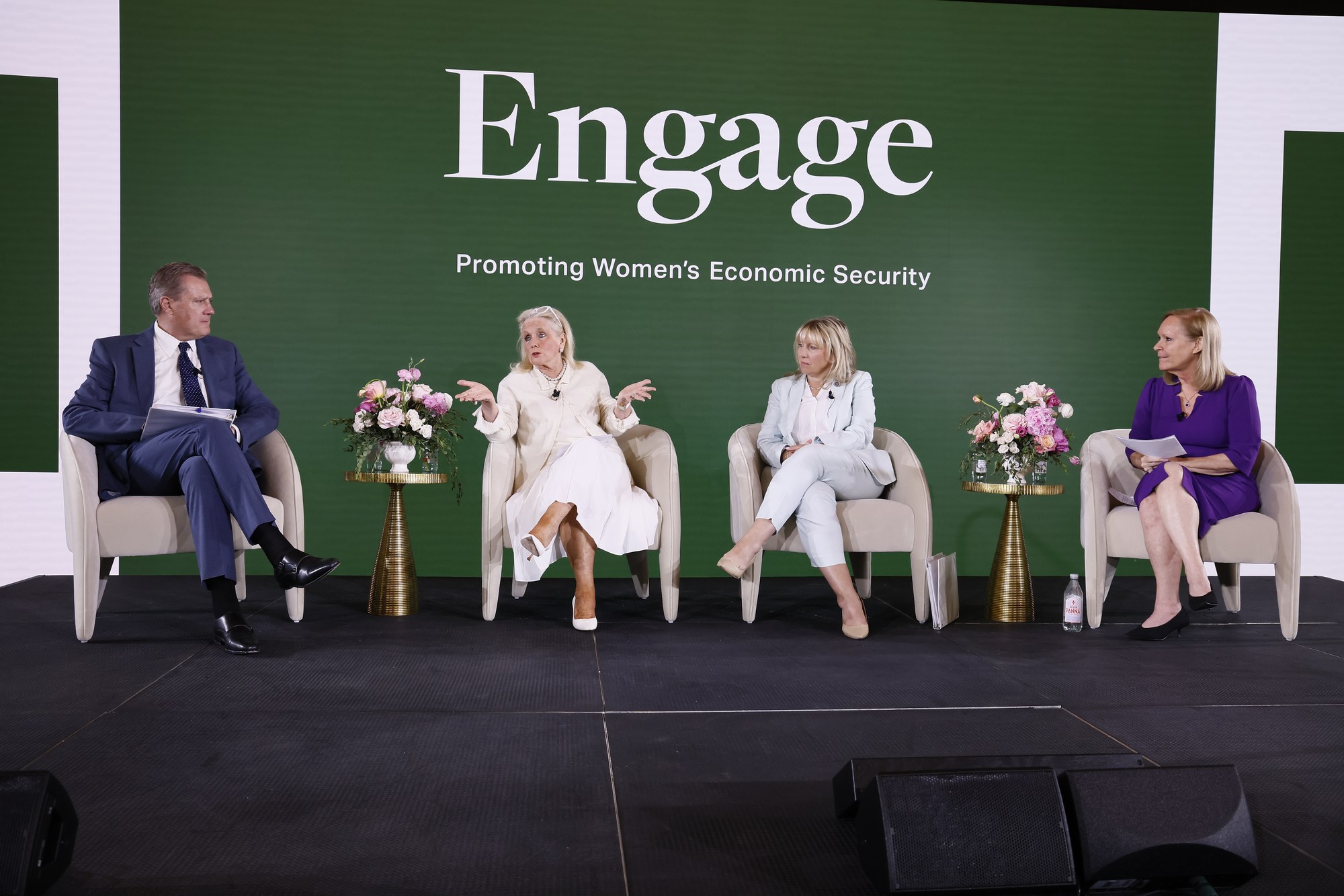
Left to right: Representative Mike Turner (R-OH), Representative Debbie Dingell (D-MI), Virginia Secretary of Labor Jessica Looman, and Cindy Goff
My interest in this issue has a strong personal aspect. I grew up in a Teamster household where I saw the benefits of union support and have sought opportunities in my career to work on labor issues. When Engage’s Rachel Pearson asked if I knew an expert on women in the skilled trades that could light up a room, I didn’t hesitate. I introduced Dr. Lynn Shaw, an IBEW member, the founder of WINTER—Women in Non-Traditional Employment Roles—and the babysitter I idolized as a kid.
Lynn has been a miner, a steel worker, a longshore worker, and a journey-level electrician. Later, she earned a PhD so she could study the barriers she had encountered and help dismantle them for others. WINTER began because Lynn saw women who wanted access to high-wage union apprenticeship careers but lacked clear routes into them.
As expected, she didn’t disappoint and enthusiastically worked with Rachel to develop a two-part panel of members of Congress, a state labor secretary, and four amazing skilled tradeswomen experts that began by exploring the politics and administrative delivery of workforce solutions to broaden women’s recruitment and retention as a key to assuring vital skilled labor in the infrastructure boom. Later, the tradeswomen shared intriguing and thought-provoking insights about their successes and challenges in elevating the status and experience of women in the skilled trades.
The first discussion featured Rep. Debbie Dingell of Michigan, Rep. Mike Turner of Ohio, and Virginia Secretary of Labor Jessica Looman. From different perspectives—labor protections, defense production, apprenticeship systems, and state workforce strategy—they quickly reached the same conclusion: the country needs more skilled tradespeople, and women need better access to the stable, well-compensated careers these fields provide. Then the conversation got deep … and hopeful.
“America needs talent, women need opportunity, and public policy can connect the two by expanding registered apprenticeships and pre-apprenticeships in high-demand sectors.”
— Cindy Goff
Congresswoman Dingell framed skilled trades as a direct route to economic mobility, challenging the assumption that a four-year degree is the only respectable path to success. “Having a college degree does not guarantee a job. We’ve got to prepare people to have a skill set that is going to get them a job.” She described how union apprenticeships can lead to strong wages, benefits, safety protections, and long-term security—especially important for women balancing work, family responsibilities, and financial pressure. She also stressed that when half the population is not fully connected to high-demand trade pathways, projects take longer, employers struggle to fill jobs, and communities miss a chance to expand family-sustaining employment.
Secretary Looman emphasized that recruitment alone is not enough. If policymakers want women to enter and stay in skilled trades, training must be paired with workplace supports: paid leave, predictable scheduling, safe worksites, mentorship, peer networks, childcare, transportation, and equipment. “Those things combined … make it really possible for women to thrive.” The Secretary pointed to the strong success of registered apprenticeship programs that she supported during her time at the U.S. Department of Labor and now oversees in Virginia that combine paid work, classroom instruction, wage progression, and employer accountability. “I highly encourage us to think about how to marry our infrastructure investments with our goals around increasing opportunities for women in the construction trades.”
Congressman Turner connected the issue to national competitiveness. It is predicted that the U.S. will lack 500,000 skilled tradespeople to fill economically vital roles in the next decade. Domestic production capacity from advanced manufacturing to defense-related work depends on a pipeline of trained workers. Community colleges, internships, apprenticeships, and employer partnerships can help students move into these careers without the cost of a traditional four-year degree. “Students need to hear about these options earlier and more often.” The Congressman pointed to a success story in his district, the Lima Tank Plant, half of whose welders are women with work experience qualifying them for skilled trades that will be needed for the foreseeable future.
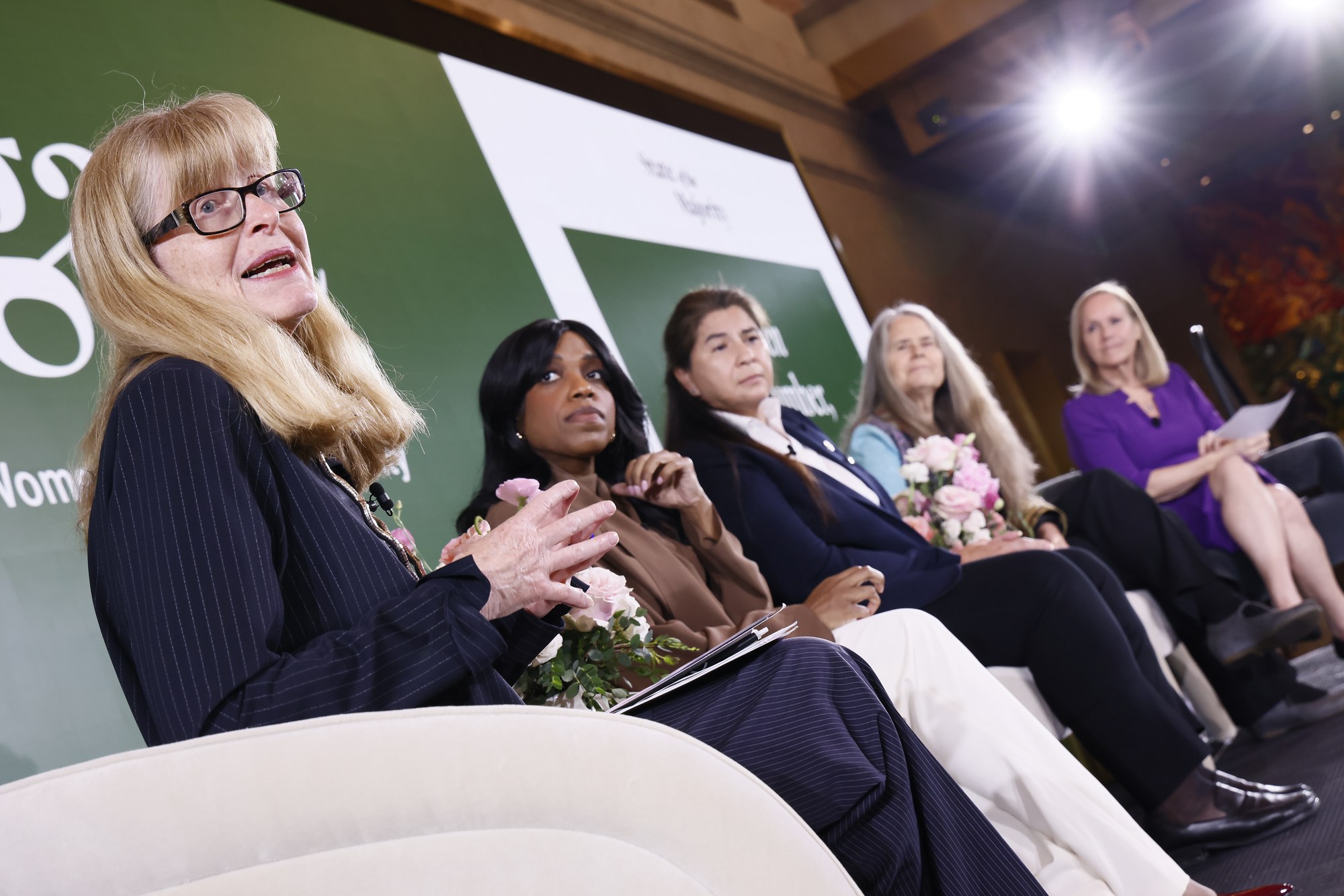
Ariane Hegewisch, Institute for Women’s Policy Research
The message from the panel was bipartisan and practical: America needs talent, women need opportunity, and public policy can connect the two by expanding registered apprenticeships and pre-apprenticeships in high-demand sectors; requiring publicly funded projects to support inclusive recruitment and retention; investing in wraparound supports that help women complete training and remain employed; aligning community colleges and high schools with employer demand; and treating women’s participation in skilled trades as a core workforce metric, not a side initiative.
For the second part of the panel, Lynn brought three other amazing skilled tradeswomen and experts into the Engage family for what I hope will be the first of many discussions on this critical topic.
Ariane Hegewisch of the Institute for Women’s Policy Research set the stage with data that made the case for urgency. She highlighted that women are already working in the trades, but they remain a small share of the overall workforce. In many trades, women are still fewer than one-twentieth of the skilled trade workers. “That is not just a representation gap; it is a workforce strategy gap.” Her data shows that at a moment when employers and communities desperately need skilled labor, no economy can afford to recruit from only the minority of the available talent pool.
Lark Jackson of Chicago Women in Trades modeled moving from awareness to policy to reality. Pre-apprenticeship programs, data transparency, safe worksite requirements, deliberate advancement initiatives, and the laws and regulations that support them help convert shrouded problems into durable opportunity. Her work makes clear that inclusion in the skilled trades requires public and private systems that recruit women, prepare them, protect them, and keep them moving forward. Lark also stressed the importance of commitment to long-term funding to assure lasting success. “Non-profit funders focus on creating something new, which is cool, but it’s equally important to invest in the seed that you’ve already planted and continue to water it.”

Dr. Lynn Shaw, founder of WINTER (Women in Non-Traditional Employment Roles)
Iliana Flores of the International Brotherhood of Teamsters described success stories of employer-union partnerships such as United Airlines and the Teamsters that are the keystone to strong apprenticeship programs that build mentoring relationships and long-term job security. She also reinforced the importance of making skilled tradeswomen more visible and how inspiring that can be to a young girl imagining her future: “Visibility … seeing that I can do that job … that career is an option for me.”
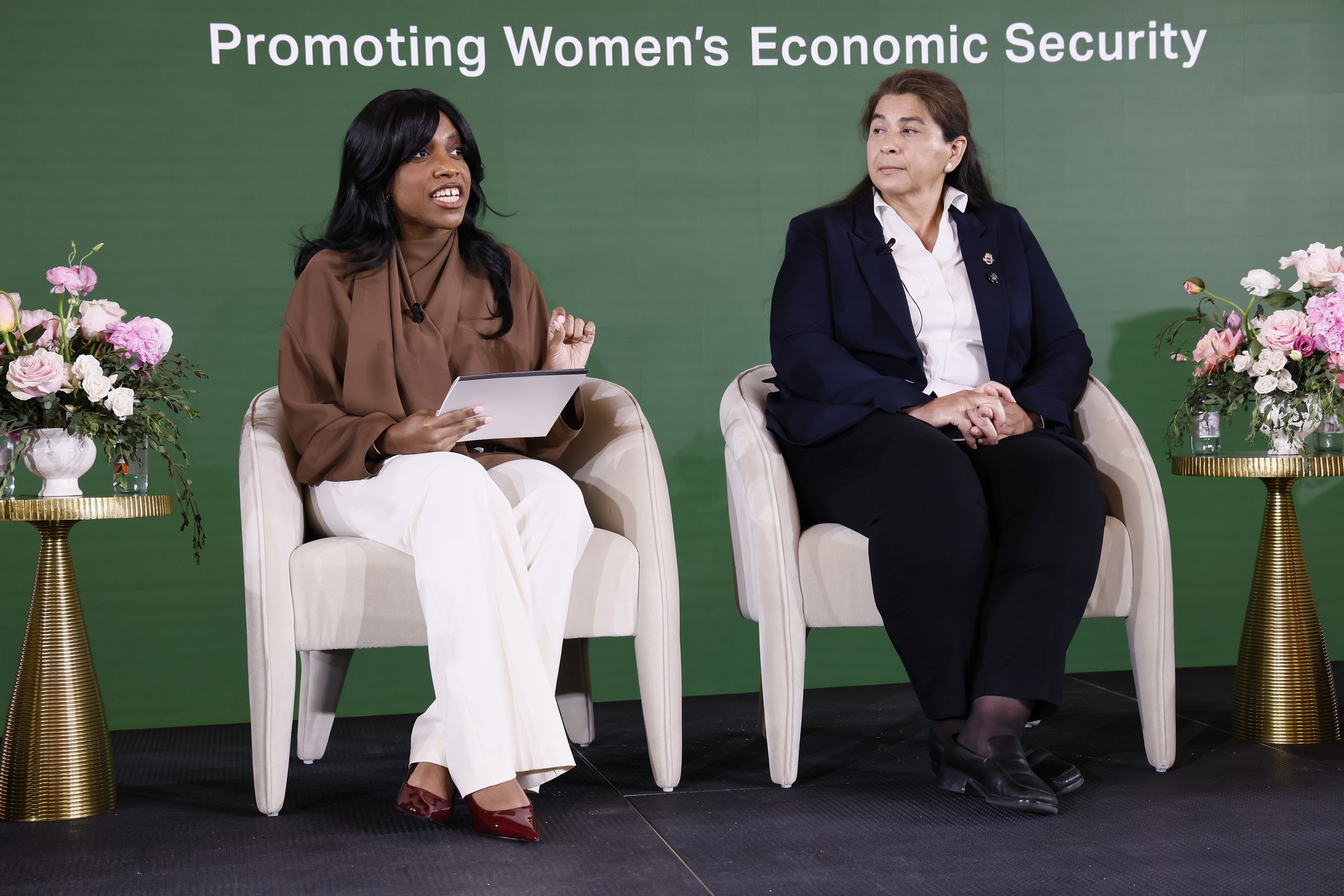
Lark Jackson, Chicago Women in Trades, and Iliana Flores, International Brotherhood of Teamsters
Together, both sets of panelists made a clear case: Policymakers are doing a lot of work, there is much more to do, but it is very do-able if we are deliberate and tenacious. We can study whether our recruitment systems, school partnerships, apprenticeship pipelines, procurement standards, workplace cultures, and retention practices are built to reach women. If the answer is “no” we have models that can show how to fix that. Each of our panels lasted 30 minutes but both groups filled our heads with hours of questions, ideas, and hope. The answers to these questions matter for women, but they matter even more for every industry and community facing potentially devastating skilled labor shortages.
A resounding phrase came from these panels: “Jobs do not have genders!” Our policy leader and expert women panelists were quoted often during the Engage Summit that day. I was proud that all of them have made the commitment to share their journeys and help us all to guide action, and grateful to Engage for giving us all a voice.
Cindy Goff is Vice President, Supplemental Benefits and Group Insurance, ACLI. She moderated both skilled trades panels.