Good morning, Thread Readers.
This week's good governing news is brought to us by Sens. John Boozman (R-AR) and Kirsten Gillibrand (D-NY), who put pen to paper and introduced the More Paid Leave for More Americans Act (S.5017), the Senate companion to the landmark bipartisan paid leave proposal in the House.
The momentum builds on years of groundwork. In February, we celebrated Reps. Stephanie Bice (R-OK) and Chrissy Houlahan (D-PA) for leading the way on the House bill. Representatives Bice and Houlahan, along with the other members of the bipartisan House Paid Family Leave Working Group, which launched in January 2023, have worked for more than three years to build consensus on this issue, releasing a legislative framework in January 2024 that inspired the bill introduced this week.
We made the full case for this policy in February's Thread and in the Reader. To remind ourselves, let's dig in.

If you know Engage, you know that caregivers are front and center in everything we do. This companion legislation is inspired by the framework of the House Paid Family Leave Working Group. The bill is fueled by incentives, not mandates; federal grants help states deliver paid leave through public-private partnerships. Participating states provide at least six weeks of paid leave, replace half to two-thirds of a worker's wages up to a cap, and coordinate through the Interstate Paid Leave Action Network (I-PLAN) to create coordination and harmonization, particularly for workers whose employment spans multiple states, who hold multiple jobs, or who relocate for work. Annual audits protect taxpayer dollars. On that foundation, the Senate text expands the proposal beyond parental leave and makes several additional changes.
Here is our Engage rundown for our readers asking how these two bills fit together:
"As a former business owner, father of three daughters and Member of Congress, I have learned just how much there is to gain from expanding paid leave resources for working families. Our bipartisan, bicameral approach offers a flexible way for more states and employers to help fewer Americans face the dilemma between career progression and financial security or meeting theirs or a loved one's needs. I am optimistic this model will spur wider adoption across the country and appreciated collaborating with my colleagues alongside passionate advocates to achieve meaningful progress that will support families and our economy."

"No American should have to choose between earning a paycheck and caring for a new baby, a sick parent, or their own health. The More Paid Leave for More Americans Act is a commonsense, bipartisan step toward solving a challenge facing millions of hardworking families. By empowering states to create robust paid parental, caregiving, and medical leave programs, this bill would help protect Americans' financial security and allow them the flexibility to deal with life's emergencies without sacrificing their income. I will fight to pass this bill through Congress and will continue working until every American has guaranteed access to paid family and medical leave."

The numbers explain why. AARP estimates that unpaid family caregivers provided $1 trillion in economic value in 2024, yet only 27 percent of private-industry workers have access to paid family leave (BLS). Engage's national poll on the House bill found that 76 percent of voters view the More Paid Leave for More Americans Act favorably and 81 percent say it is important for the Trump Administration and Congress to work together on this issue (Engage poll, February 2026).
"As the number of state paid leave programs continues to grow, access is no longer only about creating benefits, it is also about creating the shared infrastructure across states and employers so these critical benefits work better. Coordination and harmonization are essential to helping workers, states, and employers navigate a growing patchwork. The I-PLAN would help states build the connective tissue needed to make separate state paid leave systems better aligned."

The support behind this bill looks like the bill itself: bipartisan. Engage is proud to stand alongside AARP, Bipartisan Policy Center Action, Third Way, the Chamber of Mothers, and Patriot Voices in endorsing the More Paid Leave for More Americans Act.
Facts Be Told
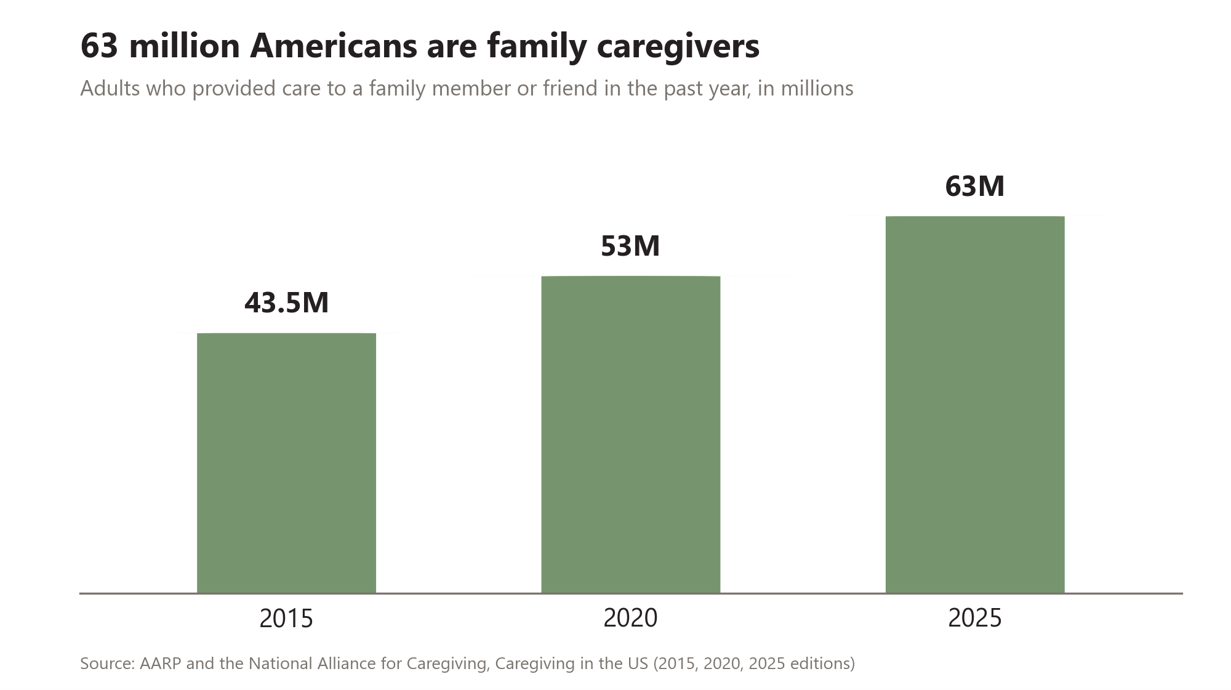
According to AARP and the National Alliance for Caregiving, 63 million Americans, nearly one in four adults, provided care to a family member or friend in the past year. That number has grown by roughly 20 million people in ten years. When nearly a quarter of the country is caring for someone they love, a bill that reaches caregivers reaches almost every family.

The following leaders have shown tremendous bipartisan spirit in their commitments to American women and their families or simply made life more enjoyable:

On Capitol Hill this week, the untimely death of Senator Lindsey Graham has conjured up lots of stories about his infectious sense of humor and self-deprecating wit.
It has Engage HQ thinking about the power of laughter in negotiating as well as in public life generally.
So, some validation of the power of laughter from a 2004 essay by John Forester titled "Responding to Critical Moments with Humor, Recognition, and Hope":
"Having a sense of humor has almost nothing to do with canned, pre-packaged jokes and everything to do with perception and imaginative responses in the heat and flow of work: with words that reframe and change worlds, with perspectives that allow us to look at a situation in new and different ways, seeing what's right in front of us as we have never seen it before, and perhaps laughing with some relief as we do."
A reflection from Normajean McLaren in the essay:
"...we need limits to our own seriousness even, or especially, in the face of pain, precisely because we will often want and try not only to recognize another's hurt and distress, and not just to treat others as victims, but to do more. The 'seriousness' cycles the room down. It gets heavier, and heavier, and heavier, and I don't believe that hope is built on heaviness."
Be kind to one another.