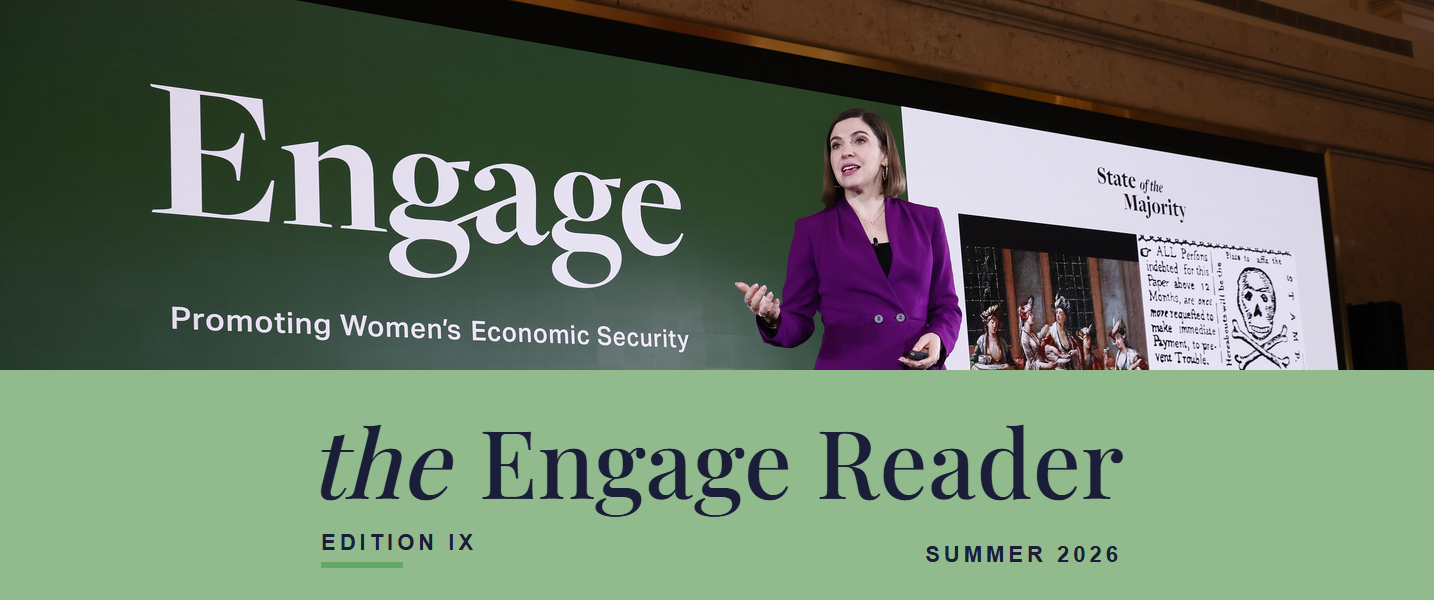
Top image: Dr. Lindsay Chervinsky, Executive Director, George Washington Presidential Library; author of Making the Presidency
Adapted from Dr. Chervinsky’s keynote address by Crystal Mosser Anderson.
One of the questions I get most frequently as we approach America’s 250th anniversary is: How do we engage people who have often felt like this story does not apply to them?
Young people. People who live in places that were not part of the original union. People whose rights and identity as citizens were not fully recognized in the founding story.
I want to push back on that narrative.
Because so many more people were recognized in the founding than the story we sometimes tell. So many more people were essential to the creation of the nation than we often acknowledge.
When we think about the Revolution, I want us to think of it as encompassing and expansive - not because it checks an HR box or fits a particular modern framework, but because it is the accurate story. And because it is so much more useful.
I want to offer a founding legacy that I think we should focus on this year - one that is productive, helpful, and relevant to what we might do going forward. From the very beginning, women were involved in resistance efforts against Great Britain.
While men’s names were often attached to merchant accounts, women were frequently the ones deciding how much flour to buy, how much tea, chocolate, and sugar a household could afford. They managed budgets. They rationed supplies. Most women in the eighteenth century were taught to read and write in part so they could maintain household account books and contribute to the functioning of the home.
So when men gathered in places like Boston and Independence Hall and called for non-importation agreements - urging Americans not to purchase British tea, sugar, or wool and instead turn to homespun alternatives - it was women who translated those political decisions into daily practice.
The boycott of British goods only worked because women agreed to participate and uphold it. What was debated in political circles became possible in kitchens, households, and marketplaces across the colonies.
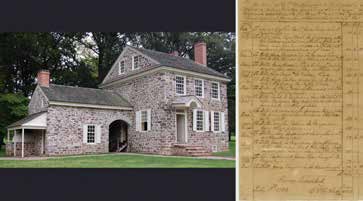
Washington’s winter headquarters, and his own account of Mrs. Washington’s expenses traveling to join him there each winter, settled July 1, 1783
In fact, even something as distinctly American as coffee culture emerged because women chose to forego tea and create a new form of social life around another hot beverage. Images from the period celebrated elite women serving coffee, not tea, because that had become the expression of what it meant to be truly American.
And once the colonies chose independence as their path forward, women remained essential to every part of that story.
Thomas Jefferson drafted the Declaration of Independence, and many men edited and debated it, but he wrote it in the Graff House - a household sustained by women whose cooking, cleaning, and care made that work possible.
And once there was war, women became involved in every aspect of the effort.
From elite women to camp followers, women supported the army in countless ways. Martha Washington joined George Washington at his winter headquarters every year not because conditions were luxurious, but because he wanted her there.
We know remarkably little about their marriage because Martha destroyed nearly all of their correspondence after his death, but this act of traveling through difficult winter conditions to be with him suggests something meaningful: commitment to one another and commitment to the cause. She was not alone.
Each winter, officers’ wives joined headquarters life and hosted gatherings, dances, and celebrations not because they viewed these moments as frivolous, but because morale mattered.
Women also served as nurses. They earned wages. They cooked, cleaned, and supported military life. Some followed their husbands into military camps to help sustain household income. Some even fought.
“What if we viewed the 250th anniversary not as a single year of celebration, but as the beginning of eleven years of reflection and renewal leading to the Constitution’s 250th anniversary?”
— Dr. Lindsay Chervinsky
Women were also essential because they held together life at home - the very communities and households the army was fighting to defend.
If a soldier received word that crops had failed, children were struggling, or his family could not manage without him, he might leave.
Women carried enormous responsibility and made difficult decisions without the opportunity to consult their partners.
Abigail Adams offers one powerful example. During the Revolution, while John Adams was serving in Congress, she chose to inoculate their children against smallpox - a difficult and risky decision at a time when inoculation itself carried danger.
But she and many mothers believed that risk was preferable to the possibility of an epidemic moving alongside armies. These decisions were among the countless choices women made to ensure that a home front continued to exist.
Of course, not all women experienced the war from a distance. Women in places like Savannah, Charleston, and Philadelphia lived under British occupation and made impossible decisions about survival. Some remained loyalists. Some supported independence. Others simply adapted.
Many found ways to exercise agency anyway - renting rooms, managing households, setting rules for soldiers, and asserting authority even when the law denied them formal power.
Now, most of the roles I’ve discussed thus far have centered largely on white women, but that does not mean the Revolution was a white revolution.
By the end of the war, some regiments in the Continental Army were made up of as much as 25% Black soldiers - men fighting not only for the nation’s liberty, but for their own freedom. Their service and extraordinary valor are an often overlooked but essential part of the founding story, and their sacrifice challenged assumptions and began to shift attitudes about slavery itself.
Black women remained essential as well. While many were less visible around the Continental Army itself - often because families were separated or relationships were not legally recognized - their contributions were no less significant. In the South, many continued laboring on plantations to help sustain the colonies, while others used the disruption of war to pursue freedom by fleeing to British lines, where they often worked as laundresses, nurses, and in many of the same roles white women held within the Continental Army.
Native nations were also an essential part of the Revolution. They fought as both allies and enemies of the Continental and British armies, making strategic choices based on which side they believed would offer the better future for their communities.
In general, Native nations often experienced war differently than white armies did. While white armies typically marched men away from their home territory, leaving women and children behind, Native communities were often much closer to the conflict itself, meaning women, children, and entire communities bore a more immediate and devastating cost of defeat.
So why does this matter? Why is it important that we tell this fuller story?
Because I think the true legacy of the Revolution is, of course, the concept that all people are created equal. But it is also a spirit of innovation and reform.
If we look at the first decade and a half of American history beginning with the Declaration of Independence in 1776, we see a generation that was remarkably willing to revise, adapt, and begin again. The Articles of Confederation were written in 1778, ratified in 1781 and just six years later they were set aside in favor of the Constitution. Two years after that came the Bill of Rights, followed quickly by additional amendments intended to close gaps the founders had not anticipated.
They were not afraid to admit when they got something wrong. They were not afraid to try something new.
When George Washington left the Constitutional Convention in 1787, he wrote to his friend Benjamin Harrison with a sentiment that was far from triumphalist. The message was not that they had created perfection. It was, essentially: this is the best that could be achieved in this moment and perhaps future generations will improve upon it.
That was intentional.
They knew there were problems they had not solved. They knew there were questions they had left unanswered. They intentionally set aside issues like slavery because they could not see a path to both addressing them and securing ratification.
So they left future generations with work still to do. The Constitution—and I say this lovingly—is something of a hodgepodge of compromises designed to secure the broadest possible agreement.
What I find so important about the founding generation is that they understood they did not have all the answers. They understood they could not create a perfect system because human beings themselves are inherently fallible.
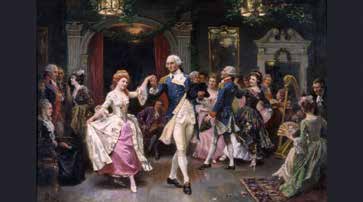
Officers’ wives joined headquarters life each winter and hosted the gatherings and dances that kept morale up
And so they left room for future generations to improve upon what they built.
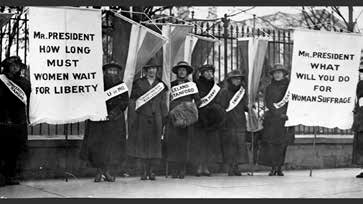
Suffragists picket the White House wearing the sashes of their colleges, demanding the vote and recognition as full citizens
For much of the nation’s history, future generations accepted that challenge.
When we think about Abigail Adams’ famous letter and quote - “remember the ladies” - I think it belongs as part of this larger challenge, and here’s why.
That quote is often taken out of context. Abigail was not asking for the right to vote. She was asking leaders to reconsider what was known as coverture - a legal system in which women were effectively covered by, or controlled through, their fathers or husbands. Women could not own property independently, make purchases in their own name, or control their own money.
Abigail had seen firsthand the challenges that came with women being entirely dependent on men’s finances - especially when husbands were ne’er-do-wells, gamblers, or otherwise squandered their wives’ dowries. What she was asking for was more basic and, in some ways, more radical: legal protections and greater independence. She also understood the frustration of this system personally.
When John Adams left the United States for diplomatic service in France and England, he made Abigail the financial manager of their estate because she was exceptionally capable and because he knew she was better at it. When he returned, he never took those responsibilities back.
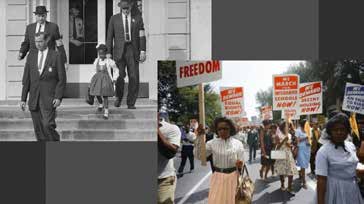
Ruby Bridges leaves William Frantz Elementary School in New Orleans under federal escort in 1960, and women march for integrated schools and equal rights at the 1963 March on Washington. Each generation picked up the work
Yet despite managing the household finances, making decisions about land purchases, investments, and long-term planning, Abigail still needed documents formally signed by male relatives - relatives she was often advising on financial decisions herself.
The contradiction infuriated her. Women after Abigail Adams continued to pick up that challenge and work to make the nation just a little more perfect with each generation.
The suffragists who gathered outside the White House demanding the right to vote and insisting on recognition as full citizens are one example of that work. And while the 19th Amendment, in theory, extended voting rights to all women, in practice Jim Crow laws in the South continued to prevent many women of color from participating. The Civil Rights Act and Voting Rights Act became essential steps in extending those rights and protections more fully.
Again, another generation continuing the work. Students are often surprised to learn that women could not obtain credit in their own names until 1974. And even after the law changed, women in places like Cleveland found banks reluctant to extend that access without a husband’s signature. They created their own institutions - pooling resources and opening banks designed to serve women directly.
So what does that mean for this moment?
What if we told the Revolution as a story in which all people were implicated, all people were involved, and all people were part of creating it? Recent polling suggests that roughly 35% of Gen Z does not believe in democracy or does not believe it will work.
That is especially concerning in a republic, because our institutions ultimately depend on citizens believing they should exist. Most of daily life is not enforced through military power - it depends on people upholding it, believing in it, and choosing to fight for it for a future generation.
So what if we told the Revolution as a story in which everyone had to participate for this experiment to exist?
What if we viewed the 250th anniversary not as a single year of celebration, but as the beginning of eleven years of reflection and renewal leading to the Constitution’s 250th anniversary?
What if this became our own decade of civic renaissance? What reforms might we achieve in the next eleven years if we put our minds to it?
How might we make the nation just a little more perfect for the generation that comes after us? That, to me, would be living up to the founding legacy. And I suspect it would make the founding mothers proud.
Crystal Mosser Anderson is Engage’s Director of Partnership Development.