
Top image: Left to right: Elizabeth Jungman, Partner, Global Regulatory, Hogan Lovells; Carla Cartwright, Vice President, Global Digital and Regulatory Policy, Johnson & Johnson, who moderated the panel; and Amy Shuart, Vice President, Technology and Innovation, Business Roundtable
Carla Cartwright, VP of Global Digital and Regulatory Policy at Johnson & Johnson, opened by collapsing the distance the room might have expected between the day’s economics talk and its turn toward healthcare. “Everyone in the room is a patient,” she said. “If you’re a person, you’re a patient, and you’re likely caring for someone.” Being healthy is what makes economic security possible, and the cost of poor health lands hardest on women: roughly two-thirds of caregivers are women, and women who are caregivers are 2.5 times more likely to live in poverty. Rather than treat AI as a threat, Carla counted the reasons it could help — turning scattered health data into something usable, widening who gets included in clinical trials, and reaching the maternal-health deserts where care is hardest to find.
Other panelists, Amy Shuart of Business Roundtable and Elizabeth Jungman, a former FDA chief of staff, focused the conversation on one distinction: it’s not whether something is AI, it’s what AI is being used for. Scheduling an appointment and diagnosing a condition aren’t the same risk, and the FDA already regulates accordingly. Jungman drew the line sharper than policy usually allows: “If you get it wrong in healthcare, right, people really get hurt. We’re not treating in widgets.” A tool trained on data that skews male can fail a woman precisely because she trusts it, and the fix starts with women in the room when it’s built.
The upside is real: AI that compresses a decade-long drug pipeline, that builds a patient’s actual priorities into how a product gets judged, that could ease what Shuart called the “mental load” of midlife women managing kids, aging parents, and a career, down to the doctor’s appointment that keeps getting put off. The warning is clear: AI will be regulated federally or state by state, with more than 1,500 bills already introduced across 45 states this year. Get that wrong and none of the promise reaches anyone.
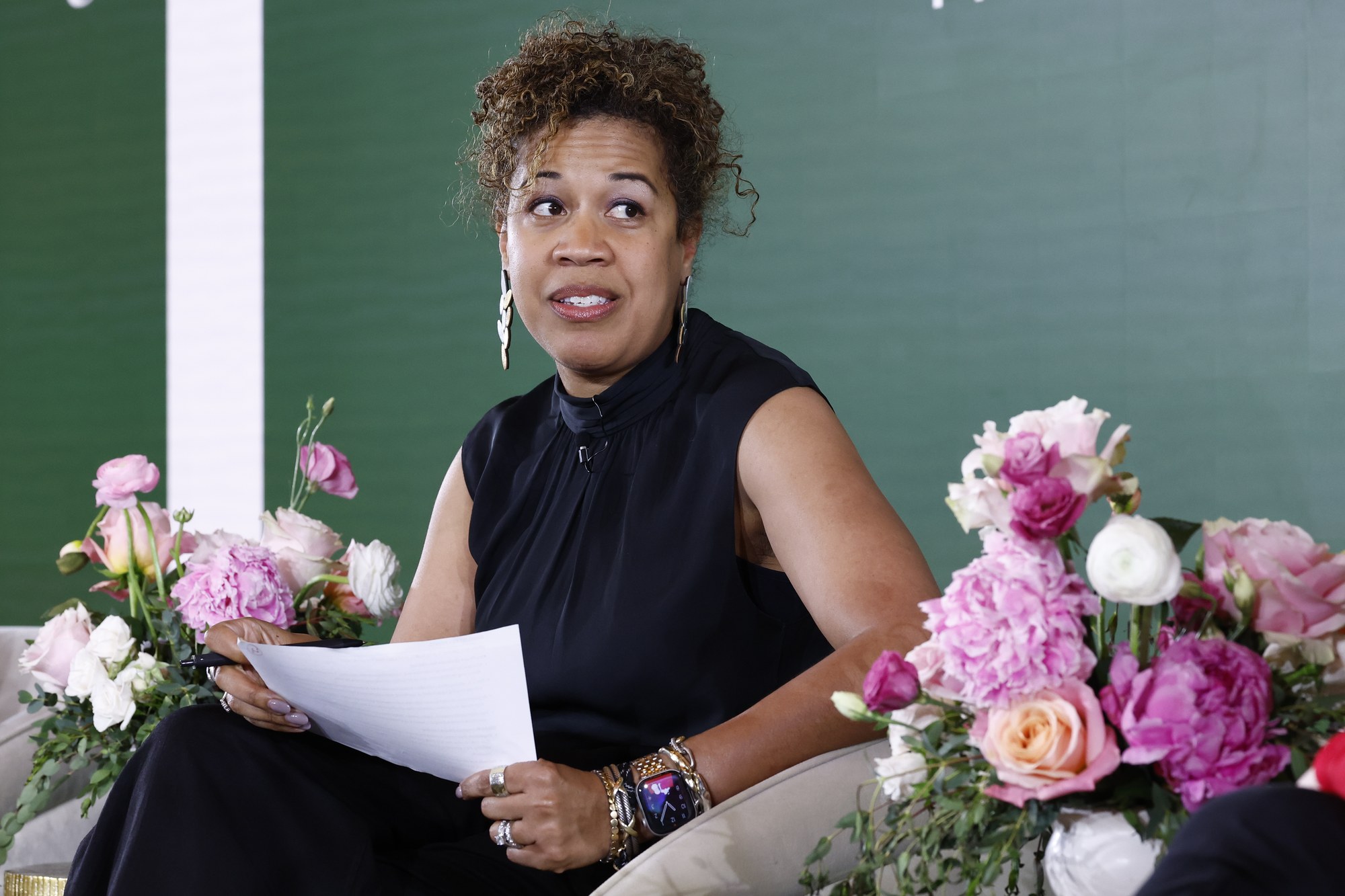
Carla Cartwright, VP of Global Digital and Regulatory Policy at Johnson & Johnson