It’s a fine morning when we get to report that this week the House of Representatives introduced a bipartisan bill whose aim is the support of new parents and babies.
Consider that, in the weeks after the birth of a child, household income drops while costs climb. A parent cuts hours, often without any paid leave to cover the loss in wages. Diapers, formula, hospital bills, and the first child care payments all hit at once. By the month a baby is born, the average household sits about 10 percent below its pre-conception income, and single-mother households lose more than 40 percent. The average insured mother is about to pay roughly $743 out of pocket for her delivery itself.
The Supporting Newborn Parents Act of 2026, introduced this week by Reps. David Valadao (R-CA), Tom Suozzi (D-NY), Blake Moore (R-UT), and Debbie Dingell (D-MI), would create a one-time $2,000 newborn tax credit that working parents can elect to receive within weeks of bringing their baby home.
Let's dig in.

The Child Tax Credit, recently expanded to $2,200 per child and indexed to inflation, has long enjoyed bipartisan support. However, the credit arrives at annual tax filing time, sometimes more than a year after a child is born. For families whose costs land in the delivery room, that is a long wait.
Lower-income families and women carry the heaviest load. Women are far more likely to cut hours or leave work entirely after a birth, and lower-wage jobs are the least likely to come with paid leave.
While the federal newborn savings provision in the One Big Beautiful Bill Act of 2025 offers a $1,000 deposit into a Trump Account, which can be a valuable tool for long-term wealth building and financial education, it does not provide immediate relief for a new parent when the first round of bills arrives.
The Solution
The Supporting Newborn Parents Act of 2026 was introduced by Reps. Valadao (R-CA), Suozzi (D-NY), Moore (R-UT), and Dingell (D-MI) to ease the financial strain families face in a child's first year. The bill creates a standalone $2,000 newborn tax credit, codified as a new section of the Internal Revenue Code and indexed to inflation. Families would receive it in addition to the existing Child Tax Credit, not in place of it.
What the bill does:
•Provides a one-time credit of up to $2,000 for each 🍼 newborn child born during the tax year. Families with twins 🍼🍼 receive $4,000; triplets 🍼🍼🍼, $6,000; and so on…•Phases in at 20% of earned income from the first dollar, with the full credit available at $10,000 in annual earnings. Families earning less receive a proportional credit ($5,000 in earnings results in a $1,000 credit per newborn).•Uses the same income phaseouts as the Child Tax Credit, so families do not face benefit cliffs that penalize work or marriage.•Parents can elect to calculate the credit on either the birth-year tax return or the prior year’s earnings. That option matters for mothers whose pregnancy reduced their work hours or who anticipate a delayed return to work because of a medically complex childbirth or a NICU stay for their newborn.•An advance-payment option lets parents apply at the hospital alongside the Social Security Administration’s birth-registration paperwork. The Treasury would also be charged to create a web portal for submitting key documents. Applies to babies born starting in 2026.
“As a father of three, I know how quickly costs can pile up—from diapers and clothing to strollers, childcare, and other essentials during a baby’s first year. That’s why I’m proud to lead the bipartisan Supporting Newborn Parents Act of 2026, which would provide up to $2,000 per newborn as an advance payment to help families cover the immediate costs that come with welcoming a child into the world.”
— Rep. David Valadao (R-CA)
“Welcoming a new baby into the world should be one of the happiest moments in a family’s life, not one filled with fear about how to pay the bills. At a time when so many Americans are struggling with the rising cost of living, this bipartisan bill will support young families and provide immediate, practical relief to working parents as they handle those critical first expenses.”
— Rep. Tom Suozzi (D-NY)
“As a father of four, I know how quickly expenses add up when a new child arrives: diapers, car seats, strollers, clothing, formula, and the unexpected costs that come during the first year. I’m excited to introduce the Supporting Newborn Parents Act to build on policies in the Working Families Tax Cuts, like the increased Child Tax Credit, by creating an additional tax credit for working parents of up to $2,000 per newborn child. This credit will help new and growing families by creating a financial cushion to meet their baby’s needs when they need it most.”
— Rep. Blake Moore (R-UT)
“Bringing home a newborn should be a moment of pure love and wonder, not financial stress. This legislation puts tax dollars back into the wallets of working families when they need it most, helping to cover everything from diapers to doctor’s visits. I am proud to support this effort, because every family deserves peace of mind in those first precious moments.”
— Rep. Debbie Dingell (D-MI)
A national survey commissioned by American Policy Ventures, fielded April 2 to 3, 2026, among 1,500 likely 2026 general election voters, shows this legislation is a bipartisan winner.
The bill was introduced in the House without a Senate counterpart. Hopefully, with the strength of the polling numbers, a Senate version won’t be far behind.
Facts Be Told
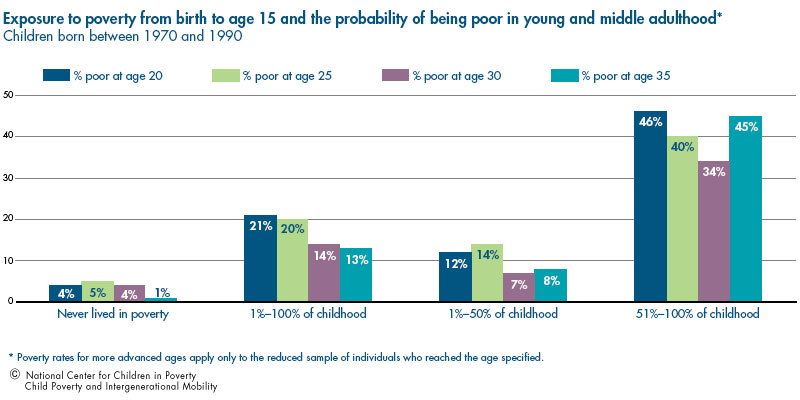
Childhood poverty leaves a long shadow. Adults born between 1970 and 1990 who never experienced poverty as children were rarely poor in their 20s and 30s. Adults who spent more than half of their childhood in poverty were poor at rates several times higher, well into middle adulthood.
That gap is part of the case for putting cash in families’ hands when costs are spiking, rather than at tax time the following year. The Supporting Newborn Parents Act targets the first weeks of a child’s life, when an income shock is most likely to push a household below the poverty line and begin a longer stretch of childhood poverty. A $2,000 credit at birth is timed for exactly that window.

The following leaders have shown tremendous bipartisan spirit in their commitment to working families or simply made life more enjoyable:

The Social Security Administration recently released its annual list of the 1,000 most popular baby names for 2025. Here are the top 5 for boys and girls:
Boys
1. Liam
2. Noah
3. Oliver
4. Theodore
5. Henry
Girls
1. Olivia
2. Charlotte
3. Emma
4. Amelia
5. Sophia
And for comparison, here is 1950’s list of the most popular names for bundles of joy:
Boys
1. James
2. Michael
3. Robert
4. John
5. David
Girls
1. Mary
2. Linda
3. Patricia
4. Susan
5. Deborah
Be kind to one another.