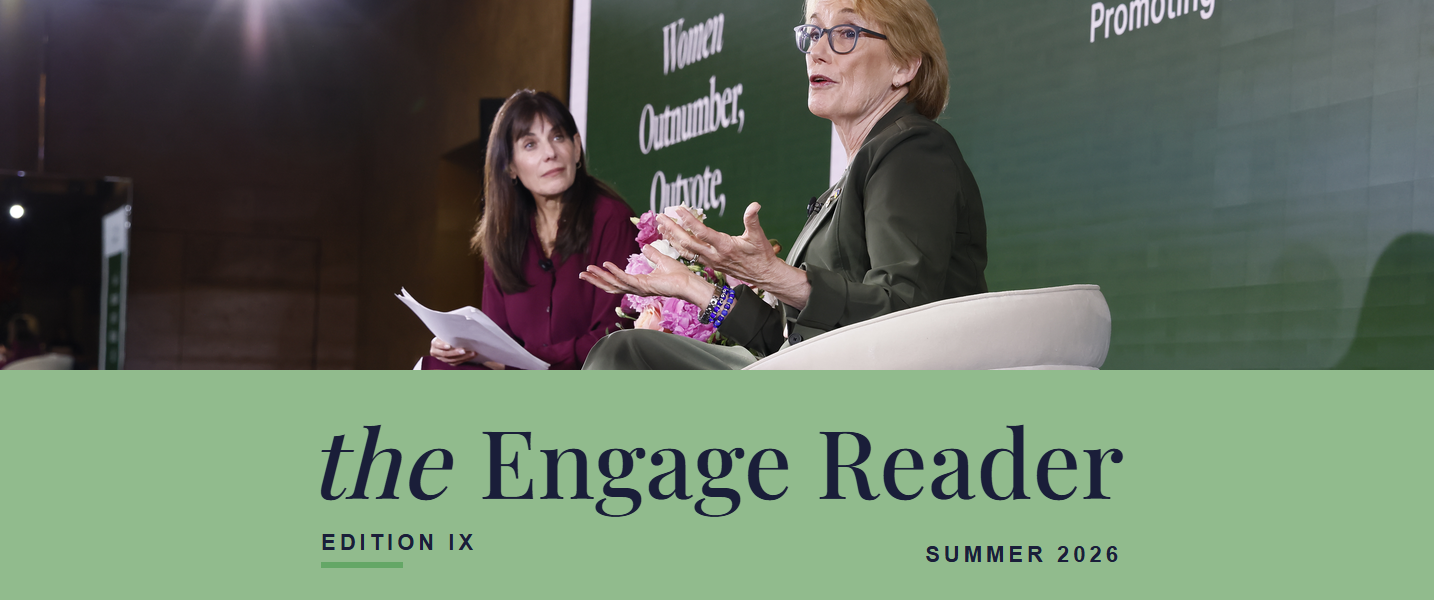
Top image: Senator Maggie Hassan (D-NH) and Jean Chatzky, author of The Forever Paycheck
As moderator Jean Chatzky noted at the beginning of this conversation, women live an average of five years longer than men, yet that longevity often comes with greater financial insecurity - driven by the gender wage gap, years spent caregiving, and lower lifetime retirement savings.
That reality framed Jean Chatzky’s conversation with Sen. Maggie Hassan at Engage’s 2026 State of the Majority Summit. Together, they explored the policies shaping women’s economic security from the rising cost of living and retirement savings to caregiving, bipartisan collaboration, and the future of financial security.
JEAN CHATZKY: Women across the country are feeling the pressure of higher prices - from groceries and gas to housing. Is relief on the way?
SEN. MAGGIE HASSAN: “My jaw drops every time I go to the gas station. Right now, every time I’m in the grocery store, my husband’s actually the shopper, and he comes home with a regular list of the things that have just gone up and up and up.”
She noted that the average family in New Hampshire has paid roughly $3,000 more in costs since the beginning of the year - about $200 each month.
“When you think about what else that $200 a month could be spent on, including retirement savings, it’s really meaning that people feel just so incredibly stretched at a time when there’s already so much feeling of instability and uncertainty and vulnerability.” Despite those challenges, Hassan pointed to several areas where bipartisan progress continues. “There is bipartisan interest in trying to address some of the issues that we have been talking about,” she said, citing retirement savings, housing, and childcare as areas where lawmakers have found common ground.
“We have made progress on some pension legislation over the last few years... We’ve been trying to get legislation through that would make it easier for small businesses to start up retirement plans... there’s bipartisan interest in lowering the cost of housing by increasing supply... and childcare is the other big ticket item that I think most families I talk to are really worried about.”
Still, she acknowledged that meaningful progress requires sustained focus. “There’s lots of ideas, and there are bipartisan supporters for some of these ideas, but what we haven’t seen is a kind of political will... to make these a priority.”
JEAN CHATZKY: When you take stock of women and retirement in 2026, what’s the headline?
SEN. MAGGIE HASSAN: “The headline is that women continue to be challenged in terms of being able to save for retirement, but there is growing recognition that there are policy levers that we can move to help change that.”
For Hassan, the issue isn’t abstract - it’s deeply personal. “I talked about being a member of the sandwich generation. I just lost my mom, who was 94 in March, and I also have an adult son with severe disabilities who lives at home with us.”
“We don’t acknowledge that caregiving value in our economic system right now.”
— Sen. Maggie Hassan (D-NH)
“The time I have spent out of the workforce as a caregiver weighs on me because it impacted my retirement savings.” She noted that millions of women face the same challenge as they step away from work to care for children, aging parents, or family members with disabilities.
“We don’t acknowledge that caregiving value in our economic system right now.” While caregiver tax credits and other proposals are beginning to address the issue, Hassan believes there is still significant work ahead.
“But I will say, just the fact that women are speaking up, women are more represented in Congress means that it’s getting more attention than it used to.”
JEAN CHATZKY: “You and Sen. Todd Young authored the Stronger Start for Working Families Act to expand the Child Tax Credit. This sounds like a children’s bill, but it’s really a retirement bill twenty years from now. Why?”
SEN. MAGGIE HASSAN: “That’s a terrific way to frame it.”
Hassan explained that current law doesn’t allow many low-income families to receive the full Child Tax Credit from their first dollar earned. The bipartisan legislation she introduced with Sen. Todd Young would change that by expanding access to the full refundable credit.
“When you think about that, that’s additional cash that you have to work with as you’re planning for your retirement, and it offsets some other expenses so that you can begin to put away even small amounts of money, which, as we know, at the beginning of careers can compound into real, effective retirement savings.”

Bipartisan women senators during a recent Senate CODEL, beginning second from left: Sens. Cynthia Lummis (R-WY), Kirsten Gillibrand (D-NY), Lisa Murkowski (R-AK), Cindy Hyde-Smith (R-MS), Catherine Cortez Masto (D-NV), Maggie Hassan (D-NH), Katie Britt (R-AL), and Jeanne Shaheen (D-NH), joined by friends and colleagues
JEAN CHATZKY: Let’s talk about bipartisanship. You’ve worked across the aisle on paid family leave with Sen. Gillibrand, the Connected MOM Act with Sen. Cassidy, the Military Spouse Employment Act with Sen. Lankford and a number of other bipartisan efforts. Women in Congress and their allies have a history of working together to get things done. Where are we on that now?
SEN. MAGGIE HASSAN: “I just got back from what we call a CODEL - congressional delegation - trip. Eight United States senators, all women, went to the Arctic together.” Led by Senators Jeanne Shaheen and Lisa Murkowski, the delegation included women from both parties. For Hassan, the trip reinforced something often missing in Washington. “One of the things that Congress is most starved for is time - time with each other, time to get to know each other.”
“I think everybody in this room knows you do hard things after you build some trust with people, and that trust comes from just getting to know them, taking a step at a time.” That trust, she said, makes bipartisan progress possible.
“I think women know the importance of getting something done in the moment that will move the ball forward.”
“There is a lot of bipartisan work going on right now, including with some of the male colleagues we have on maternal health.”
“I think it’s the combination of our experiences, our life experience, and our understanding that taking an opportunity to move the ball forward and build trust really has dividends moving forward.”
“There is a lot of bipartisan work going on right now, including with some of the male colleagues we have on maternal health.”
— Sen. Maggie Hassan (D-NH)
For Hassan, collaboration isn’t about finding perfect agreement - it’s about building enough trust to make progress together.
JEAN CHATZKY: Longevity is one of the defining financial challenges facing women. The changes made through the Pension Protection Act helped more Americans save for retirement through automatic enrollment and automatic escalation, and today younger workers are saving more than ever before. But the next challenge is turning those savings into income that lasts throughout retirement. What role should the public sector play in making those tools easier to access?
SEN. MAGGIE HASSAN: “We know that if people have to opt out of things rather than opt in, they are much more likely” to save, she said, pointing to the success of automatic enrollment in retirement plans.
“If you don’t opt in for the first 10 years of your career, you will have less retirement savings and less stability.” Hassan believes policymakers should continue exploring ways to make retirement planning simpler and more accessible. “I think it would be really important for us to be sitting down with policy experts in this sector to find out what kind of automatic measures could we put in place that would give women predictable income from those savings. How do you structure that? How do you make it easy to do?”
Chatzky also highlighted the growing momentum behind state “Work and Save” programs that help employees of small businesses build retirement savings through payroll deductions. Hassan pointed to federal efforts to complement those programs by reducing the cost for small employers to offer retirement plans. “What we’ve been trying to do is say, if you’re a small employer and you’re starting up a plan, your tax benefit will be about $2,500, which is the average cost of starting up one of those plans.” “I know states are moving in different ways, and I think all of it coming together is really important.”

Senators Lisa Murkowski and Maggie Hassan enjoying each other’s time on the CODEL
JEAN CHATZKY: My 89-year-old aunt was recently the victim of deposit account fraud. It took our family hours to unravel what had happened, and the hardest part was that she had no idea where to turn for help. You’re taking a lead on this issue. Where is progress being made?
SEN. MAGGIE HASSAN: “Scams are costing the global economy more than the illicit drug trade does now.” She described an increasingly sophisticated landscape fueled by organized crime, artificial intelligence, and cryptocurrency, where convincing text messages, emails, and even cloned voices are making it harder than ever for consumers to recognize fraud.
“We believe it’s really important for the United States government to have one place to report fraud and scams like this.” To address that gap, Hassan is leading legislation to establish ReportScams.gov, a centralized reporting system designed to help law enforcement identify scam patterns more quickly and respond more effectively. She also offered a simple piece of advice for consumers.
“If you get a call, an email, or a text that creates a sense of urgency, claims to be from an organization you trust, and then asks you to pay in cryptocurrency, it’s a scam.”
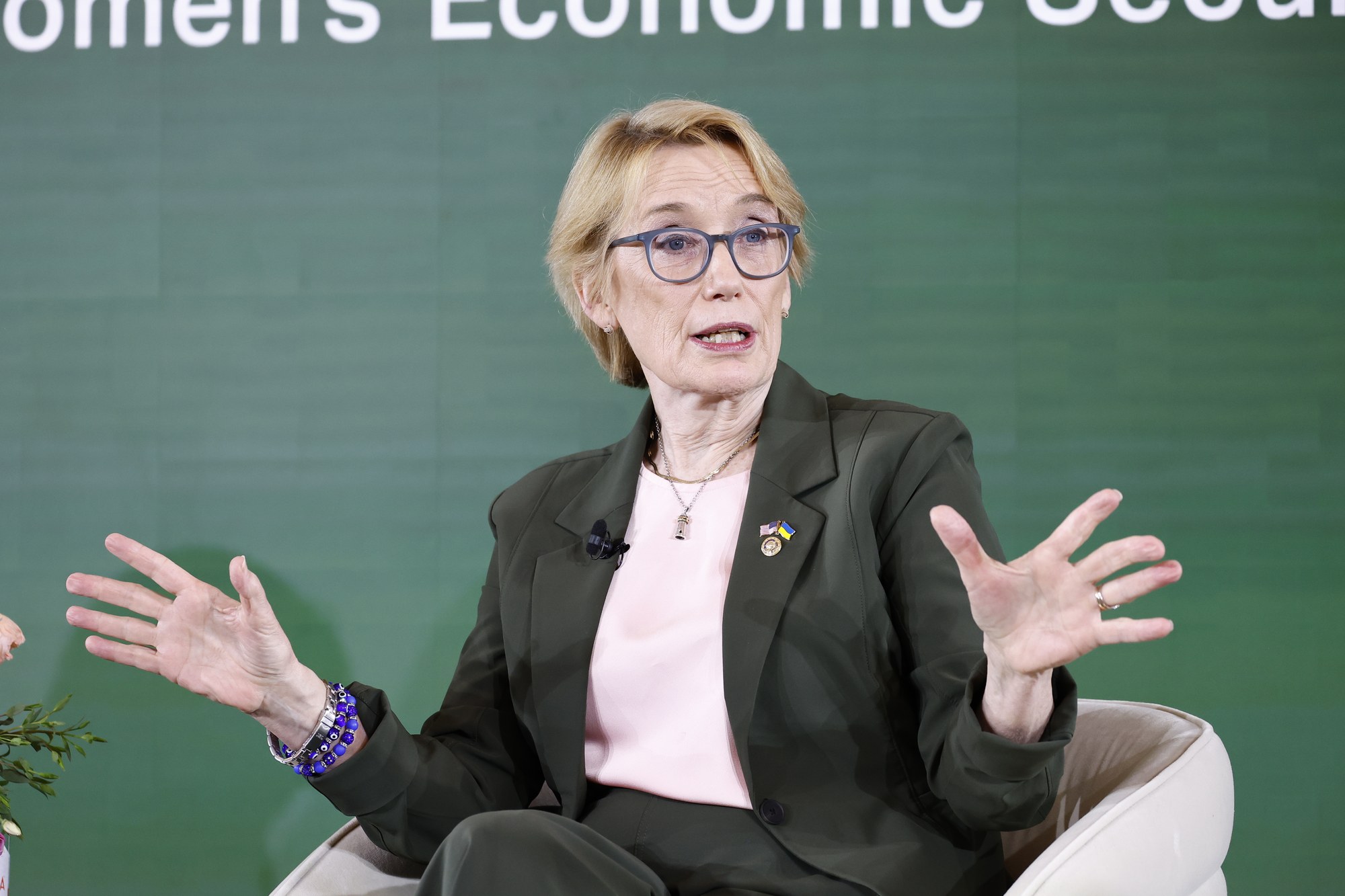
JEAN CHATZKY: Your son, I believe, was the impetus for you running for office. What do you think it’s going to take to bring more women in this environment to the Hill?
SEN. MAGGIE HASSAN: “I am looking at a room full of extraordinary women who all have different talents, experiences, and contributions to make. I feel incredibly fortunate because I get to do work that I love. I’ve served in our state senate, as governor, and now in the United States Senate, where I have the privilege of listening to the people of New Hampshire, hearing their concerns, and working to make things better so people can work hard, get ahead, and stay ahead. That’s what the American Dream is about.
“This is a really fraught time, but it is not a time to step back. It is a time to find a way to contribute. Rachel talked about the importance of bipartisanship and compromise, and that’s the name of the game in American democracy. Compromise isn’t just about settling - I think it can actually make us more creative.
“But compromise only works when everybody truly has a seat at the table and an equal voice. We need leaders who put the country first and are committed to serving something bigger than themselves.
“I would encourage all of you to consider running for office. Other than marrying my husband and having my children, it is the best thing I have ever done. The opportunity to sit in a hearing room or meet with colleagues and say, ‘Have you ever thought about this?’ - to bring your own lived experience into the conversation - is where you can truly make a difference.
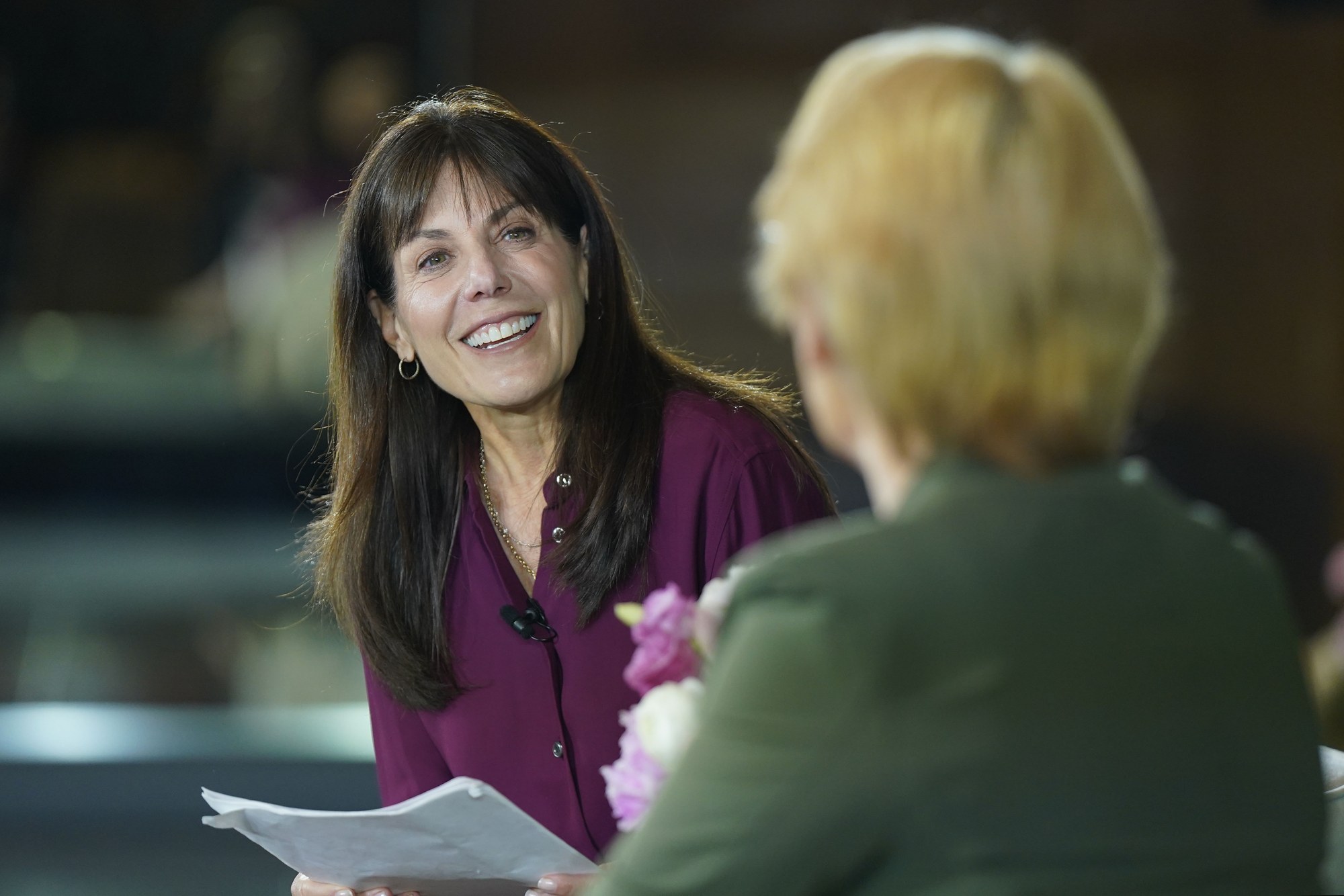
Jean Chatzky with Sen.Maggie Hassan (D-NH)
“When you’re feeling discouraged, it’s worth going back to Abraham Lincoln. He talked about the ‘better angels’ of our nature. We have to find those better angels in ourselves, look for them in one another, and step forward together.
“We’ve made tremendous progress for women, and we’ve also seen setbacks. That’s why we all have to continue the work. Everywhere I go, people want this country to recover, to move forward, and to be even better. We have some headwinds ahead, but America has been here before. We’ll get through it again.”
Crystal Mosser Anderson is Engage’s Director of Partnership Development.