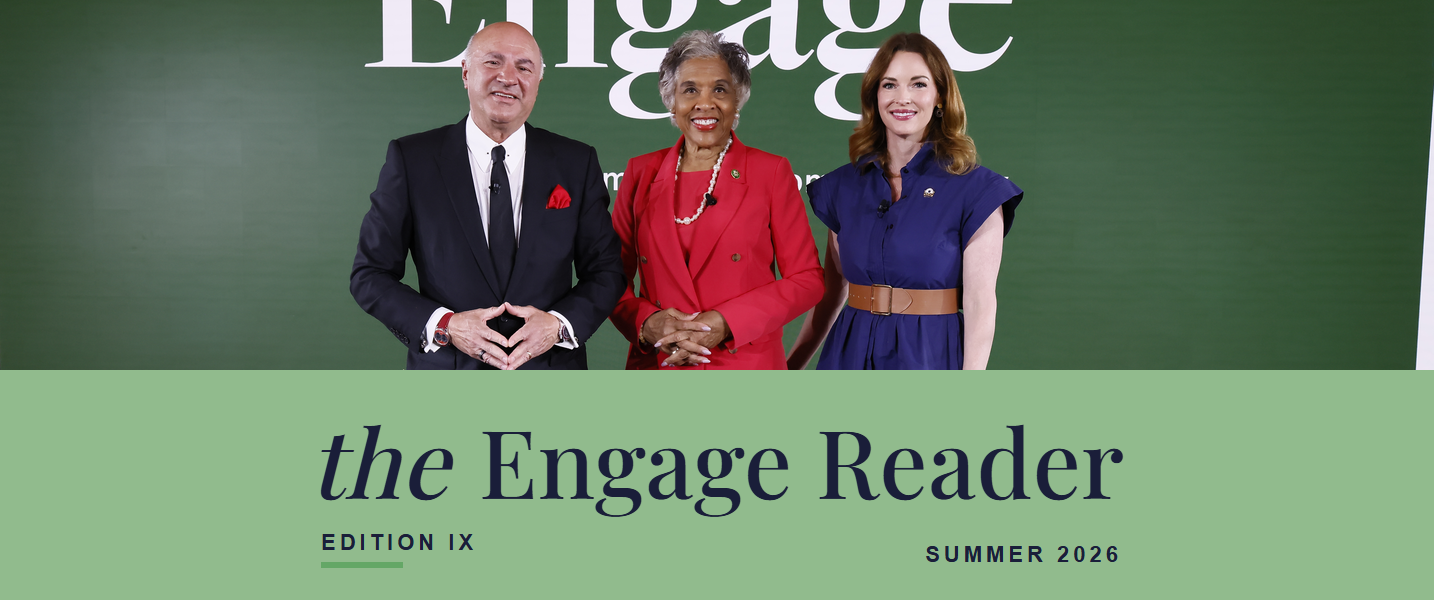
Top image: Left to right: Kevin O’Leary, entrepreneur and investor; Representative Joyce Beatty (D-OH); and moderator Shannon McGahn, Chief Advocacy Officer, National Association of Realtors
How do we create an economy where more women are not only able to start businesses, but build wealth, create jobs, own homes, lead companies, and shape the future of the American economy?
That question anchored one of the most engaging conversations at Engage’s 2026 State of the Majority Summit, when Shannon McGahn, Chief Advocacy Officer of the National Association of Realtors, welcomed entrepreneur and investor Kevin O’Leary and Congresswoman Joyce Beatty to the stage.
Their conversation moved from venture capital and access to capital to housing, artificial intelligence, and, ultimately, the role financial literacy plays in building lasting wealth.
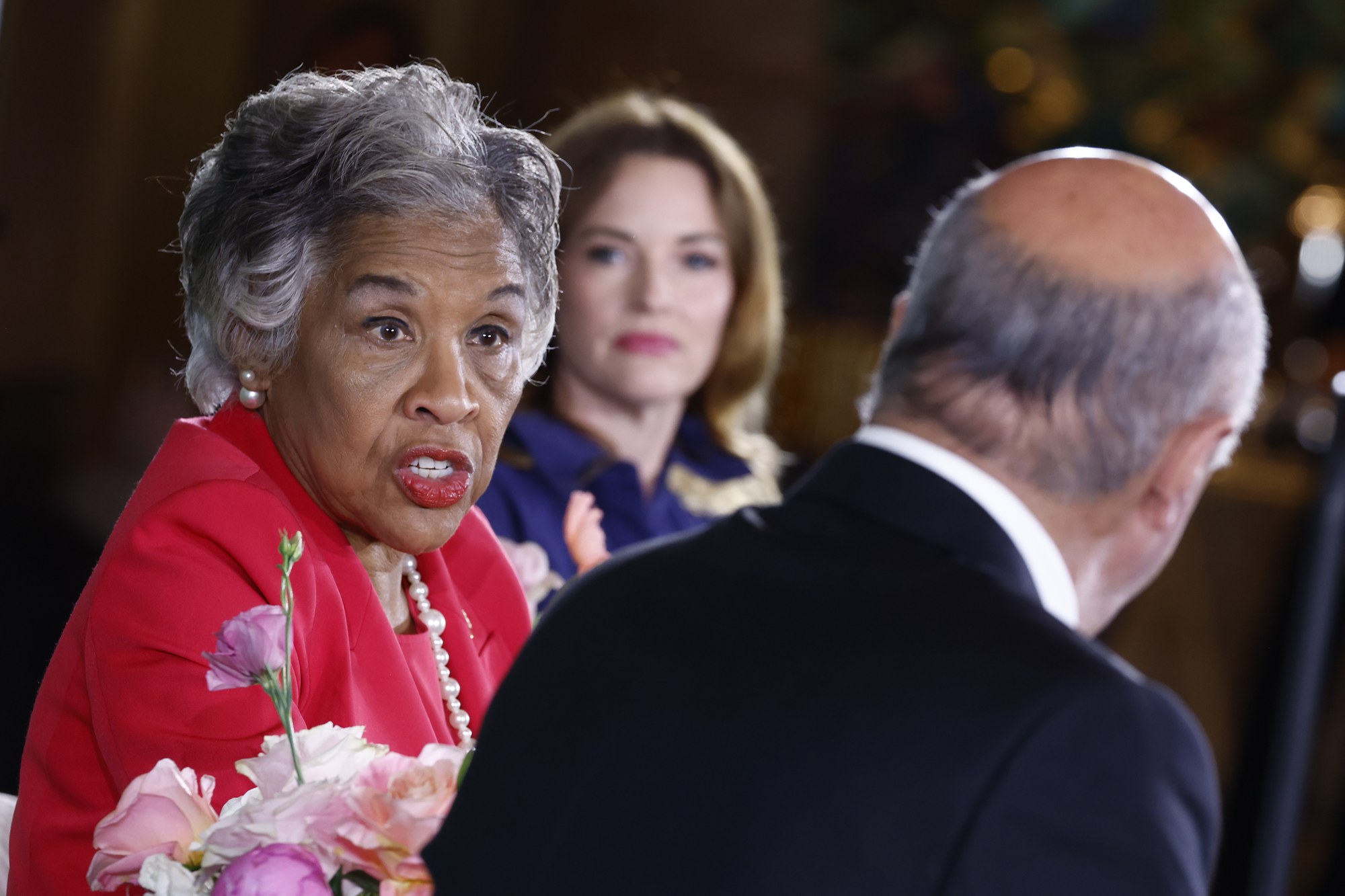
Representative Joyce Beatty (D-OH), member of the House Financial Services Committee
Yet beneath each topic was a common thread: strengthening women’s economic security isn’t about solving a single problem. It’s about creating an economy where women have the opportunity, resources, and confidence to build businesses, own assets, create wealth, and lead.
For O’Leary, those conclusions are rooted in years of investing. For Beatty, they are informed by a career spent expanding access to opportunity through banking, public service, and bipartisan policymaking. Guided by McGahn’s skillful moderating, the discussion became less about ideology and more about what actually works.
McGahn invited O’Leary to explain why women-led companies consistently outperform in his portfolio. His answer was grounded in nearly two decades of data.
“Obviously, we have 18 years of Shark Tank, which is extraordinary in itself - thousands of pitches, hundreds of deals, and, most importantly, a tremendous amount of data,” O’Leary explained. “My portfolio includes many Shark Tank companies, but we also run a private equity firm and invest across a variety of businesses. That gives us a large pool of CEOs and a lot of real-world data.”
“This isn’t an empirical university study,” he added. “This is actual performance data.” He began with the reality every venture capitalist knows well. “You fund ten startups, wait 36 months, and generally two will outperform everything else, delivering extraordinary returns, while the other eight either become zombies or go bankrupt. That’s simply the nature of venture capital.”
“If I could wave a magic wand,” she said, “I would make sure women always had a seat at the table and were never treated differently when seeking access to capital.”
— Representative Joyce Beatty (D-OH)
But when his team examined years of portfolio performance, they discovered something they hadn’t anticipated.
“What surprised us was what we found when we looked at our own portfolio over a rolling seven-year period,” he recalled. “At one point, 95% of our startup returns came from companies led by women.”
“We asked ourselves, ‘How did that happen?’ These founders didn’t know one another. They were spread across all 11 sectors of the economy and located in different states. So we dug into the data.”
O’Leary explained, “male-led companies typically budgeted for annual growth of about 31% during those first 36 months... and they hit those targets about 65% of the time.”
“Women-led companies took a different approach. Their average growth targets were about 17% - nearly half as aggressive - but they achieved those goals 95% of the time.”
For O’Leary, that consistency translated directly into stronger businesses. “Success isn’t just about return on capital - it’s about the return of capital. If you don’t preserve your investment, you don’t make any money.”
“The best analogy I can give is Tom Brady. During those championship years, nobody wanted to leave the team because they kept winning.”
“Quarter after quarter, people are hitting their goals, earning bonuses, and building momentum. As a result, you don’t lose your head of sales, your logistics leader, or your compliance officer - all departures that can be incredibly disruptive in a small company.”
The lesson, he said, wasn’t that women lacked ambition. “They weren’t growing more slowly because they lacked ambition - they were creating organizations that consistently delivered results.” Those findings ultimately reshaped how he advises every CEO in his portfolio. “About four years ago, we shared this data with all of our CEOs... I told the men, ‘Bring your growth targets down. Set goals you’re going to hit 95% of the time, and let’s see what happens to free cash flow. Our entire portfolio improved from roughly 15% pre-tax free cash flow to 17.5%. That may not sound dramatic, but in private equity, it’s a very meaningful increase.”
Then came one of the afternoon’s biggest laughs. “So now,” O’Leary smiled, “I am very biased.” “I only invest in women.”
When the producers of Shark Tank tell him he should invest in more male founders, his response is simple. “Why? They can’t seem to win.”
Congresswoman Beatty agreed with O’Leary’s conclusions but suggested the numbers reveal only part of the story.
“I do like what you said, and I’ve seen that data,” she told him. “But I think there’s another ingredient, too: the culture women create and our natural tendency to support one another. When you have a woman in leadership who brings other women along, there’s often a stronger sense of camaraderie because we understand that we’re successful together.”
She pointed to the conversations happening behind the scenes - moments before taking the stage or walking into committee hearings.
“We were just in the green room surrounded by powerful women,” she said. “What were we talking about? We both have sons who play soccer.”
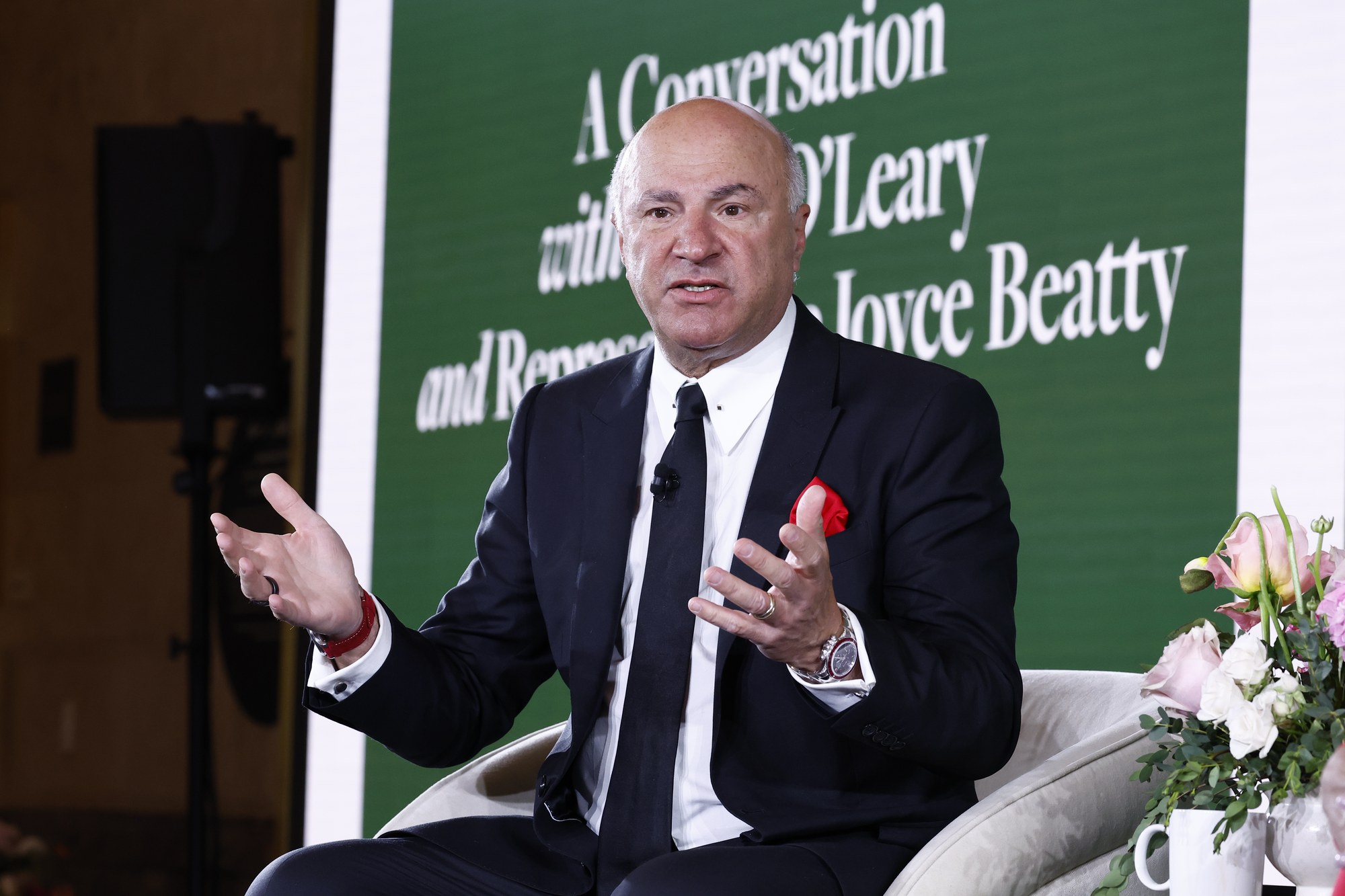
Kevin O’Leary, entrepreneur and investor
“We understand how hard it is to multitask, yet we do it every day. We make dinner or make sure someone else does, clean the house or tell someone what to do. Then we go to work, lead organizations, and serve as executives.”
“I think that shared experience creates a different kind of culture. It’s part of the glue that makes everything Kevin just described possible.”
O’Leary didn’t hesitate. “I would agree with that,” he said. “It’s like a matriarchal view of business, especially during the hardest stage of a startup.” If the conversation established one point from the outset, it was this: women don’t succeed in business because they’re lucky. They succeed because they build organizations that consistently execute, foster cultures that retain talent, and create environments where long-term success is more likely to follow.
Congresswoman Joyce Beatty shared more on the barriers that continue to stand in their way. “If I could wave a magic wand,” she said, “I would make sure women always had a seat at the table and were never treated differently when seeking access to capital.”
The numbers, she noted, tell a different story. “There are nearly twice as many male-owned businesses as female-owned businesses. Men receive business loans at significantly higher rates, and only about 2% of venture capital funding goes to women-owned companies. Those disparities didn’t happen overnight - they’re the result of decades of unequal opportunity.” “If you’re not in the room, you’re not at the table.”
“I’m an unapologetic black woman, and I know what it means to not always have a seat at the table. Representation matters.”
She pointed to leaders like Thasunda Brown Duckett of TIAA, Joi Harris of DTE Energy, and Karen S. Carter of Dow as examples of what’s possible when women have the opportunity not simply to participate, but to lead.
“We have to use our resources, create incentives, and think outside the box,” Beatty said. “We need visible role models so women can see themselves in those leadership positions and know they’re within reach.”
But access to capital is only part of the equation. “Women shouldn’t feel they have to apologize for being financially savvy,” she said. “We should be talking about compound interest, investment portfolios, venture capital, and wealth creation just as naturally as we discuss any other career path.”
It was a fitting bridge to the broader conversation that followed. Building women’s economic security requires more than helping women launch businesses. It requires expanding access to capital, increasing representation, and creating more pathways to long-term wealth.
Throughout the conversation, McGahn returned to a central theme: economic security isn’t built through income alone - it is built through ownership.
“There are few better ways to enter and remain in the middle class than through asset creation,” she observed, “whether that’s homeownership or owning your own business.”
She pointed to two statistics that underscored both the progress women have made and the challenges that remain.
“One in five homebuyers today is a single woman, making them the fastest-growing segment of new homeowners.”
Yet today’s average first-time homebuyer is now forty years old. “Compared to buying at thirty, that’s roughly a decade of wealth creation and about $150,000 in home equity that many people are missing out on.”
“Women shouldn’t feel they have to apologize for being financially savvy,” she said. “We should be talking about compound interest, investment portfolios, venture capital, and wealth creation just as naturally as we discuss any other career path.”
— Representative Joyce Beatty (D-OH)
It was a reminder that entrepreneurship, homeownership, and financial literacy are all part of the same conversation: building long-term wealth.
McGahn then pointed to one of the afternoon’s most encouraging examples of bipartisan progress.
“Congresswoman, you testified before the Financial Services Committee on housing, and that bill passed with 396 votes. We couldn’t even get a Mother’s Day resolution passed with 396 votes.”
Her question was straightforward: How do we continue that momentum while ensuring more women have access to one of the nation’s most important wealth-building assets?
Beatty’s response focused on the realities many women navigate every day.
“When we talk about women and housing,” she said, “we also have to look at the realities many women face.”
“The traditional model assumes a two-income household, but many women are single mothers - whether they started that way or became one through divorce.”
“They’re relying on a single income while also managing childcare and other responsibilities.”
“Those realities have to be part of the equation when we talk about homeownership.”
“For many of us, this work is deeply personal because we’ve lived it.”
“One in five homebuyers today is a single woman, making them the fastest-growing segment of new homeowners.”
— Shannon McGahn, National Association of Realtors
Looking toward O’Leary, she smiled. “And when you have men who are willing to invest in women, champion women, and stand alongside us, you end up with a Joyce Beatty and a Kevin O’Leary on a stage together.”
If the first half of the conversation focused on today’s economy, the second looked ahead to the forces already reshaping tomorrow’s.
For O’Leary, that future begins with policy. “I focus a lot on policy,” he said. “That’s why I’m in Washington so often. Politics is volatile - I don’t have to tell you that. But what ultimately comes out of this city is policy, and policy determines where capital flows.”
One development, he admitted, caught even seasoned investors by surprise. Artificial intelligence.
“I wasn’t a fan of tariffs, and I’m still not,” he said. “I believe in free trade. Tariffs increased costs throughout the economy - that much was expected. But what nobody saw coming, including me, was AI.”
Rather than describing AI as a distant possibility, O’Leary pointed to the ways it’s already transforming everyday business. Insurance policies that once took weeks to underwrite can now be processed in seconds. Drone inspections powered by AI are making infrastructure maintenance faster, safer, and more efficient.
“The productivity gains are extraordinary,” he said. “Costs for that operation have fallen by roughly 70%.” Speaking about one of his portfolio companies, FlyGuys, he added:
“The images are compared against previous inspections using AI, which identifies potential problems, generates a repair order, and often does so before the drone has even landed.”
“That’s why I’m in Washington so often. Politics is volatile - I don’t have to tell you that. But what ultimately comes out of this city is policy, and policy determines where capital flows.”
— Kevin O’Leary
“The technician is earning significantly more, the work is safer, and the inspection takes just 20 or 30 minutes instead of several hours.”
For O’Leary, these aren’t isolated examples.
“They’re why the market continues to reach new highs,” he said. “AI is the gift that keeps on giving. Very few people predicted how quickly it would reshape the American economy, but that’s exactly what’s happening.”
But innovation, he argued, requires infrastructure. “Which lets me do a quick commercial on data centers,” he joked.
“We need more computing power.” “We need more data centers.” Acknowledging concerns about the rapid growth of data centers - particularly in Northern Virginia - O’Leary argued that the technology has evolved significantly.
“I know they aren’t always popular - especially here in Virginia, where some of the early facilities were noisy and inefficient. But technology has changed dramatically since then.”
He warned that America’s ability to lead in artificial intelligence will depend on its willingness to invest in the infrastructure that powers it.
“Unfortunately,” he continued, “there’s also a lot of foreign misinformation aimed at slowing America’s investment in power infrastructure and data centers because AI leadership matters.”
“The country that leads in AI will have the strongest economy, the strongest defense and will rule the world.”
It was a fitting reminder that the future of women’s economic security will be shaped not only by access to capital, but also by the policies, technologies, and infrastructure that define the economy they are building within.
As the conversation drew to a close, O’Leary shifted from entrepreneurship to the foundation that underpins it all: financial education.
“We’ve spent enormous amounts of money teaching math and reading to get students through high school and into college. Yet we teach almost nothing about personal finance.”
He stressed that financial independence should begin early.
“Women should be taught at a young age to maintain their financial identity in perpetuity, even after marriage. That means having your own credit card, your own bank account, and then, if you choose, a joint account as well.”
For Beatty, education is only the beginning. “We need to teach women not only financial literacy, but how to be in the room where decisions are made.”
She closed with a challenge that captured the spirit of the conversation.
“We shouldn’t be afraid to say, ‘I am powerful. I am smart. I am financially stable.’” By the end of the discussion, the answer to the afternoon’s opening question had become clear.
Helping more women build lasting wealth requires more than supporting entrepreneurs. It means expanding access to capital, creating pathways to ownership, embracing innovation, and equipping women with the financial knowledge and confidence to lead.
Crystal Mosser Anderson is Engage’s Director of Partnership Development.